
Counterfoil: AI Revenue Operations
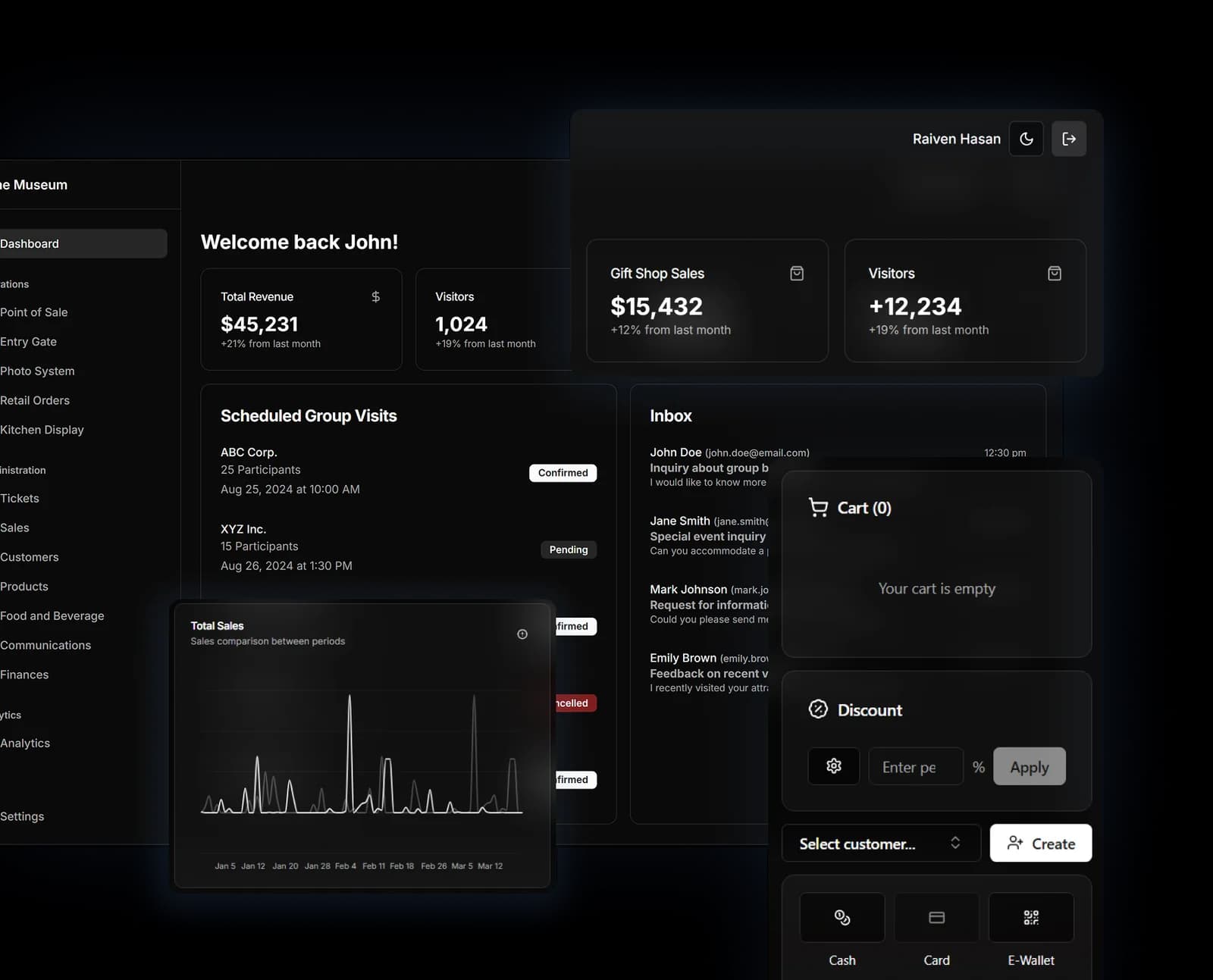
With Counterfoil, Ternary built Continuum — an AI-native operating layer that brings pricing, inventory, and distribution together for experience-economy operators.
- Industry
- Experience economy
- Engagement
- Flow — dedicated product team
How we approached the work, what we built, and why it matters.
Counterfoil is building an operating platform for the experience economy — museums, theme parks, tours, and entertainment venues across Bangladesh and the United States.
The challenge
Every operator runs differently. Escape rooms book hourly slots, concert venues sell assigned seats, museums offer timed entry, tours schedule departures — and existing software forces each business to bend its operations around the tool. Revenue-critical work sat in disconnected systems: booking in one place, pricing in another, channel distribution in a third, with slow decisions and fragmented data as the result.
Our approach
Ternary engaged as Counterfoil's dedicated engineering team under our Flow model. We put domain clarity before model complexity — normalizing inventory semantics, availability windows, pricing constraints, and channel policies first, then layering model-assisted recommendations only where they add value. Every automated decision stays inside explicit policy boundaries, observable and override-capable, so operators keep control.
What we built
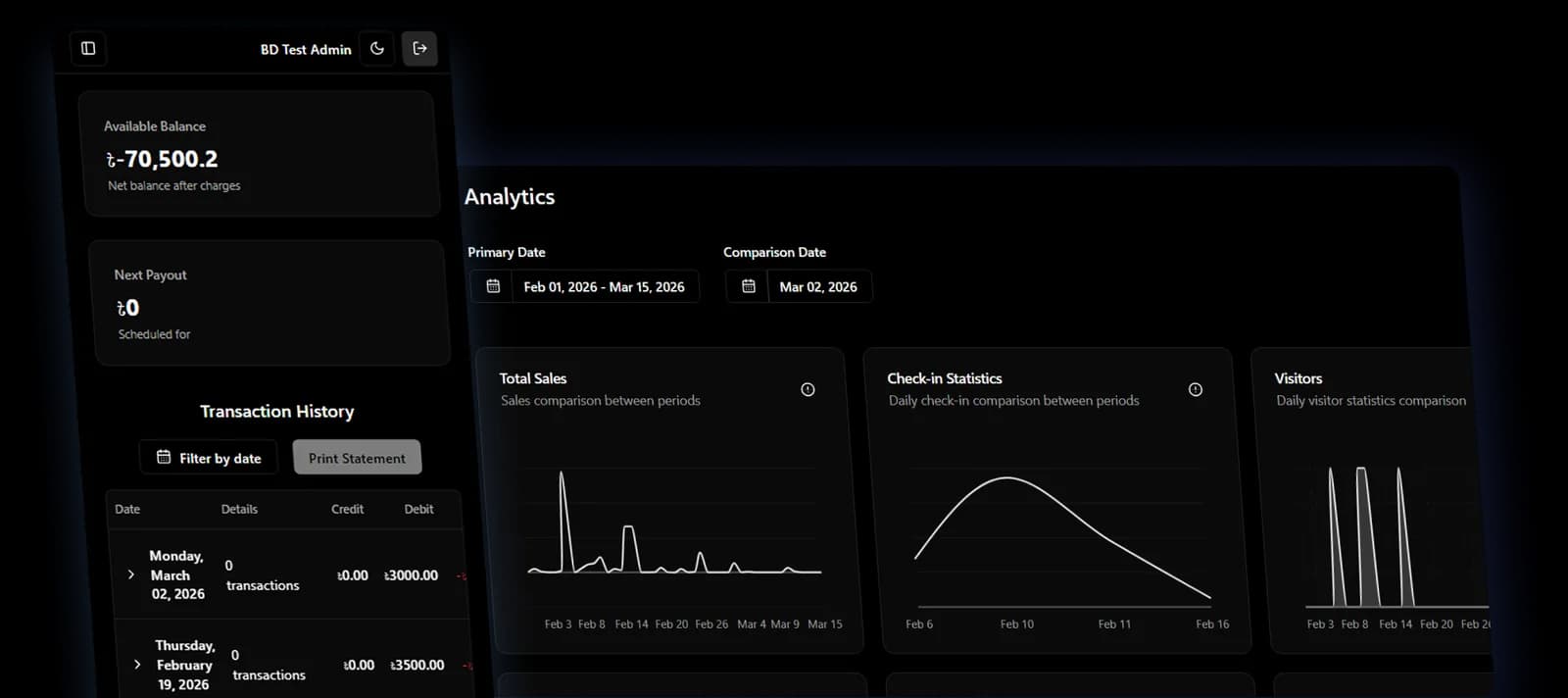
Continuum is an AI-native revenue operating layer that unifies pricing, inventory, and distribution in one extensible platform. An abstract product model represents any experience — per-timeslot, per-item, or per-seat — and a configurable pricing engine supports new scenarios without a code deployment. The platform is multi-tenant with complete data isolation, built as event-driven services behind API-first contracts, with payment rails for both Bangladesh and the US.
The outcome
Operators now manage pricing, inventory, and channel exposure as connected levers instead of separate administrative chores, and new venue types come online through configuration rather than custom code. The partnership continues, with Ternary extending the platform into deeper pricing intelligence, loyalty, and channel integrations.
The work, up close.
Related case studies.


Have a similar problem worth solving?
Tell us where you’re headed. We’ll bring the engineering discipline to get you there.